
Eng: Finally warmer days! It's pleasantly warm now, and it doesn't need to get any warmer than this, I think. I have now applied for a single program at the university. I applied to the Bachelor's program in Chemistry – Molecular Design, at Linköping University. Lin Xueping, what my Chinese boyfriend called it. He has to come and visit me soon, because I am on the verge of giving up with this endless waiting, unfortunately. I will inform him that it is becoming very urgent for me to meet for the first time. I will say that we must meet in the first week of August, that he will help me with a temporary move from Stockholm to Linköping (if I get admitted), but if he does not step up for me, then I have probably waited enough, unfortunately. In August, I will have been waiting for a meeting with him for 1.5 years.
I have all the qualifications for the Molecular Design program, except for a single subject: Biology level 1. I never knew I would need a biology course one day. But fortunately, I have acquired the necessary knowledge elsewhere; for example, I have studied Medicine (which covered a lot about the human organs), and I have completed an entire 1.5-year education to become a pharmaceutical technician, which means I know a lot about the structure of cells, their organelles, and functions. On a very deep level, really. So I made a special application and wrote a long paper in which I tried to prove my case, that I do know Biology after all and that I hope they will give me a chance anyway considering my knowledge.
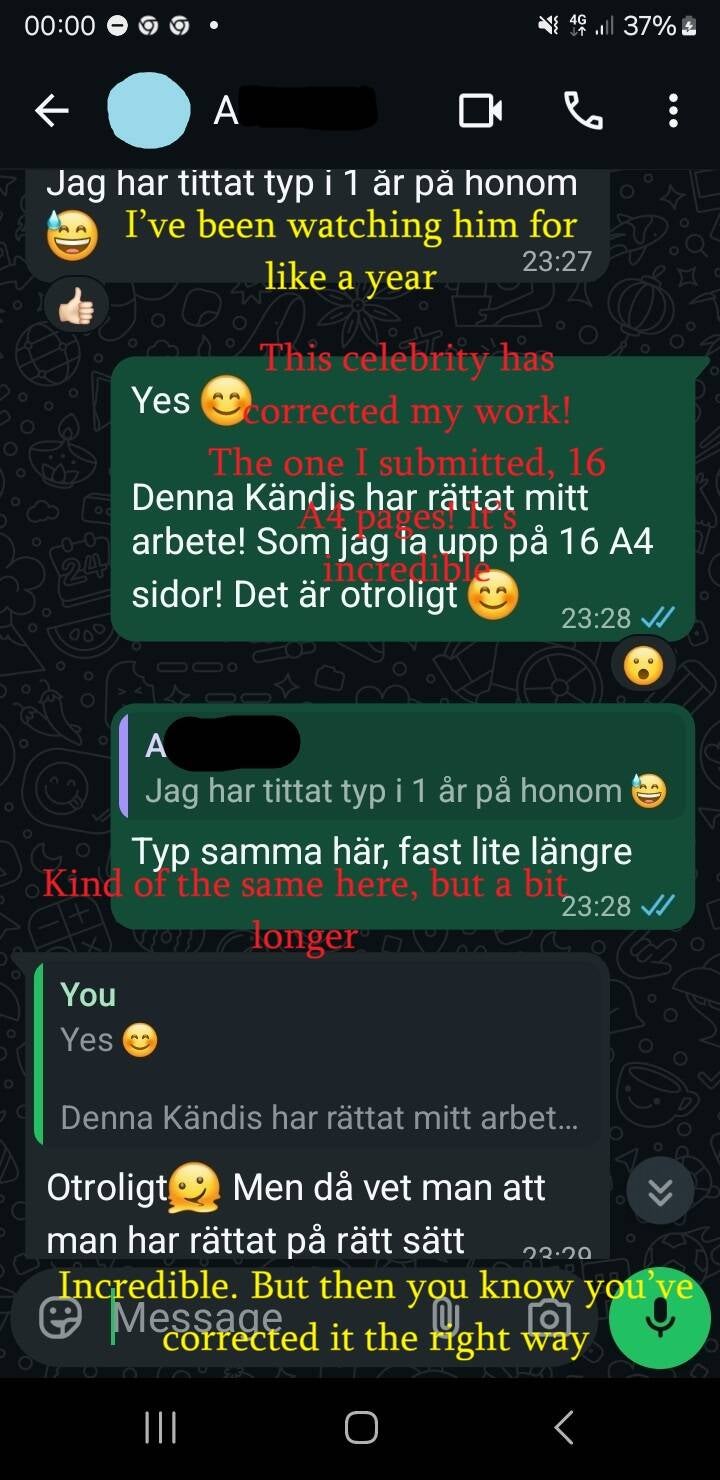
The paper that I wrote in 2 weeks is 16 pages long (however, the first page is only about my school background). I am about to post my Biology paper here as my Summer post for 2026. This has also gained much more weight when I had the paper corrected by a Biology teacher first, before I submitted it. I paid a company that was supposed to find a biology teacher for me, but I got my money back because I only wanted a single lesson with someone, not pay for a long series of lessons. I had to look elsewhere. I took a chance and contacted a Swedish celebrity, and to my great surprise, I got a very nice response, and he wanted to correct my paper. Absolutely incredible! However, we had very little time, so it was only one quick correction. But still, what an honor!!!
Sv: Äntligen varmare dagar! Det är lagom varmt nu och det behöver inte bli varmare än så, tycker jag. Jag har nu sökt en singular sökning till universitetet. Jag sökte till kandidatprogrammet i kemi – molekylär design, på Linköpings universitet. Lin Xueping, som min kinesiska pojkvän har skrivit. Han måste komma och hälsa på mig snart, för jag är på gränsen att tröttna i denna eviga väntan tyvärr. Jag kommer meddela honom att det börjar bli väldigt bråttom för mig att träffas för första gången. Jag kommer säga att vi måste ses första veckan i augusti, att han ska hjälpa mig med en tillfällig flytt från Stockholm till Linköping (ifall jag blir antagen), men om han inte ställer upp för mig så har jag nog väntat färdigt, tyvärr. I augusti har jag väntat på en träff med honom i 1,5 år.
Jag har all behörighet för programmet molekylär design, förutom ett enda ämne; Biologi nivå 1. Inte visste jag att jag skulle behöva en biologi kurs en dag. Fast som tur är så har jag fått in nödvändiga kunskaper på annat håll, jag har t.ex. läst Medicin (det var mycket om en människas organ i denna) och jag har gått en hel utbildning på 1,5 år till läkemedelstekniker, som gjorde att jag vet mycket om cellernas uppbyggnad, deras organeller och funktioner. På en djup nivå verkligen. Så jag gjorde en specialansökan, och skrev ett långt arbete där jag försökte bevisa min sak, att jag kan Biologi trots allt och att jag hoppas att de ger mig en chans ändå med tanke på mina kunskaper.
Arbetet som jag skrev på 2 veckor är 16 sidor långt (Första sidan handlar dock endast om min skolbakgrund). Jag ska strax lägga upp mitt Biologi-arbete härinne som mitt Sommar-inlägg 2026. Denna har även fått mycket mer tyngd när jag lät arbetet bli rättat av en lärare i Biologi först, innan jag skickade in. Jag betalade till ett företag som skulle leta upp en biologi-lärare åt mig, men jag fick pengarna tillbaka för att jag ville bara ha en enda lektion med någon, inte betala för en lång rad lektioner. Jag behövde leta på ett annat ställe. Jag chansade och kontaktade en svensk kändis, och till min stora förvåning fick jag ett jättetrevligt gensvar, och han ville rätta mitt arbete. Helt otroligt! Dock så hade vi väldigt lite tid så det blev bara en enda snabb rättning. Men ändå, vilken ära!!!
Hello!
During my studies to become a pharmaceutical technician (a 1.5-year vocational program) at Frans Schartau Business Institute in Stockholm, I learned a great deal about, for example, animal cells and yeast cells. This is because cells are used in the manufacturing and development of pharmaceuticals; for instance, insulin can be produced in yeast cells.
I will now describe in more detail what I have studied during my education, and I hope to demonstrate that I possess the corresponding knowledge required for Biology Level 1 in upper secondary school. Pages 15–16 contain information that I found outside of school. I also managed to get a quick confirmation by ____ (even though I found his E-mail in the last moment on the net), and it turned out I need to add a couple of things to the text. I have also read the grading criteria myself to support what the students learn about. Therefore, the information presented ended up as it did. I try to be as comprehensive as I can.
Some sections in the main text are in italics, and that information comes from the textbook “Biology for Upper Secondary School – Level 1 (Nationalencyklopedin).” These italicized sections often deal with philosophical theories in this work, not to describe the structure and function of cells and organelles. However, Biology for Upper Secondary School has been used on almost every page.
I have contacted my former teachers at Frans Schartau Business Institute, for example [teacher] (contact details in a separate document), who confirm that we have covered large parts of the teaching (in approximately 4–5 courses) related to, for example, yeast cells, bacteria, animal cells, the citric acid cycle, and ATP formation, and that we also had exams within these areas. I have also studied Medicine 1 at adult education (Komvux), at Lärgården in Skanstull (about 10 years ago), where I learned a lot about, for example, human organs. I received the grade A.
The Yeast Cell
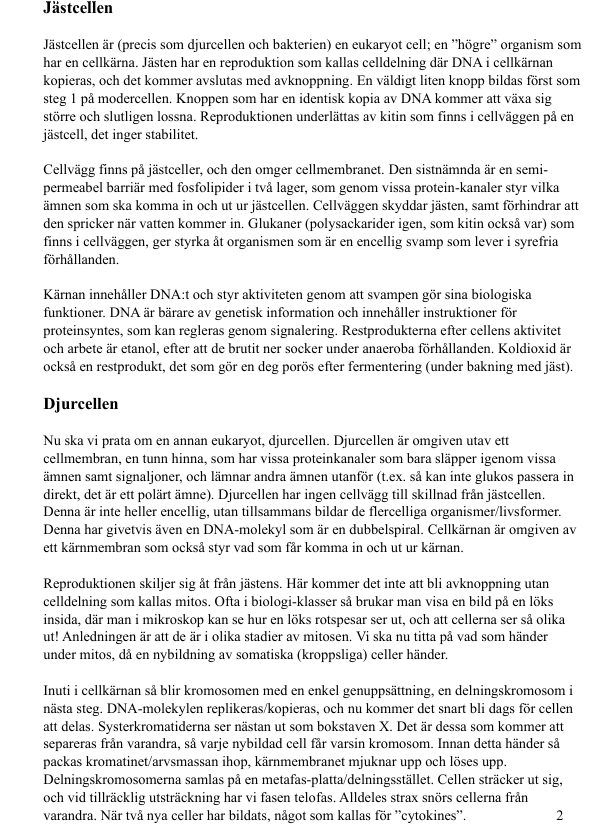
The yeast cell is (just like the animal cell and the bacterium) a eukaryotic cell; a “higher” organism that has a cell nucleus. Yeast reproduces through a process called cell division, where a DNA copy is made in the nucleus, and this is followed by budding. A very small bud first forms as step 1 on the mother cell. The bud, which has an identical copy of the DNA, grows larger and eventually detaches. The process is facilitated by chitin, which is found in the cell wall of a yeast cell, providing stability.
A cell wall is present in yeast cells, and it surrounds the cell membrane. The latter is a semi-permeable barrier made of phospholipids in two layers, allowing certain proteins to channel substances in and out of the yeast cell. The cell wall protects the yeast and prevents it from bursting when water enters. Glucans (polysaccharides), chitin, and sometimes proteins are found in the cell wall, giving strength to the organism, which is a unicellular fungus living in oxygen-poor environments.
The nucleus contains DNA and controls activity by enabling the fungus to carry out its biological functions. DNA carries genetic information and contains instructions for protein synthesis, which can be regulated through signaling. The waste products after the cell’s activity and work are ethanol, formed when sugar is broken down under anaerobic conditions. Carbon dioxide is also a byproduct, which makes dough porous after fermentation (during baking with yeast).
The Animal Cell
Now we will discuss another eukaryote: the animal cell. The animal cell is surrounded by a cell membrane, a thin layer that has protein channels which only allow certain substances through, while releasing other substances (for example, glucose does not pass directly, as it is a polar molecule). The animal cell does not have a cell wall, unlike the yeast cell. It is also not unicellular; instead, it forms part of the multicellular organism/life form. This is made possible by a DNA molecule in the form of a double helix. The nucleus is surrounded by a nuclear membrane, which also controls what enters and leaves the nucleus.
Reproduction differs from that of yeast. Here, there is no budding; instead, cell division occurs, called mitosis. Often in biology classes, an image of an onion is used, where under a microscope one can see onion root tips, and that the cells look different! The reason is that they are in different stages of mitosis. We will now look at what happens during mitosis, when new somatic (body) cells are formed.
Inside the nucleus, the chromosome initially has a single set of genes, becoming a duplicated chromosome in the next step. The DNA molecule replicates/copies itself, and now the cell is about to divide. The sister chromatids look like the letter X. These will then separate from each other, so that each newly formed cell receives its own chromosome. This happens as the chromatin/DNA mass condenses, the nuclear membrane breaks down and dissolves. The chromosomes gather at a metaphase plate/division stage. The cell stretches out, and the two identical daughter cells have almost formed. Finally, the cells separate from each other. When two new cells have been formed, this is called “cytokinesis.”
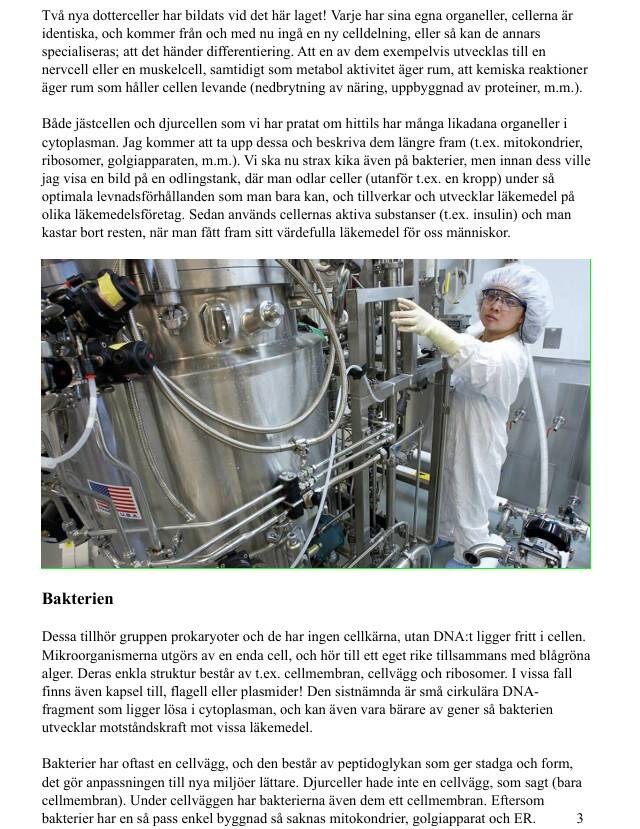
Two new daughter cells have been formed by this point! Each has its own organelles, the cells are identical, and from now on they will either undergo a new cell division, or they can otherwise specialize; that is what differentiation is. For example, one of them may develop into a nerve cell or a muscle cell, while metabolic activity takes place, chemical reactions occur that keep the cell alive (breakdown of nutrients, synthesis of proteins, etc.).
Both the yeast cell and the animal cell that we have talked about so far have many of the same organelles in the cytoplasm. I will bring up these and describe them later (e.g., mitochondria, ribosomes, the Golgi apparatus, etc.). We will soon also take a look at bacteria, but before that I wanted to show a picture of a cultivation tank, where cells are grown (outside, for example, a body) under the most optimal living conditions possible, and where medicines are produced and developed at various pharmaceutical companies. Then the cells' active substances (e.g., insulin) are used, and the rest is thrown away, once the valuable medicine for us humans has been obtained.
The Bacterium
These belong to the group of prokaryotes and they do not have a nucleus, but the DNA lies freely in the cell. The microorganisms consist of a single cell, and belong to their own kingdom along with blue-green algae. Their simple structure consists of, for example, a cell membrane, cell wall, and ribosomes. In some cases, there is also a capsule, flagellum, or plasmids! The latter are small circular DNA fragments that lie free in the cytoplasm, and can also carry genes so that the bacterium develops resistance to certain drugs.
Bacteria usually have a cell wall, and it consists of peptidoglycan which provides rigidity and shape, making adaptation to new environments easier. Animal cells do not have a cell wall, as mentioned (only a cell membrane). Beneath the cell wall, bacteria also have a cell membrane. Because bacteria have such a simple structure, they lack mitochondria, Golgi apparatus, and ER.
Bacterial reproduction usually occurs through division or by forming spores, reproductive bodies. Binary fission involves the DNA being copied, the cell growing and growing until it divides into two genetically identical daughter cells. Bacteria most often reproduce asexually in this way, but just like yeast, ferns, and many plants, some bacterial species can instead form spores. Their spores are very resistant to the environment and weather for a long time.
Common shapes of bacteria are, for example, round (cocci) or rod-shaped (bacilli). They can obtain energy, for example, by breaking down organic material (leaves, twigs, dead animals), or through photosynthesis, which applies to certain species. Different species also have different by-products, depending on how they lived. If metabolism worked with oxygen, the by-products are carbon dioxide and water (almost like in humans due to cellular respiration). If the bacterium was, for example, underground and did not have access to oxygen, the by-products are often lactic acid, ethanol, and carbon dioxide. With their metabolism and needs, bacteria can be both good and bad for humans. Many beneficial bacteria aid digestion and are used in yogurt and cheese.
The Plant Cell
This cell contains the same organelles as other eukaryotic cells, but here there are also; Cell wall made of cellulose, plastids (exist in different types, for example in the leaves they can be chloroplasts that carry out photosynthesis), vacuole (a cavity filled with liquid, to maintain shape, and where, for example, nutrients are also stored), stroma (cell fluid). Basically, cells from the plant kingdom (Plantae), which is one of the 5 kingdoms that exist, look like this, and most plants perform photosynthesis.
Reproduction, one can distinguish between the plant's growth – in that case, mitosis applies. In the other case, how plants reproduce sexually – then meiosis happens. Mitosis in plant cells resembles that in animal cells. DNA is copied, the chromosomes are pulled apart, and a cell plate forms in the middle of the cell. The cell plate develops into a new cell wall, which results in the formation of two daughter cells. Meiosis, on the other hand, is the pollination of plants. Just like in humans, the number of chromosomes is first halved, and two organisms (in this case plants) will mix their genes, and ultimately genetic variation will occur as in, for example, mammals.
Meiosis is reduction division. As a result, one later gets 4 daughter cells. For organisms to be able to reproduce sexually, the number of chromosomes is halved, and sex cells are so-called haploid. This is not the case for the other cells in the plant nor in the human body, as the other cells in the plant have a double set of chromosomes and there are very many variants of chromosome pairs. Humans have 23 chromosome pairs in their diploid, other cells.
The special sex cells are formed through meiosis. Chromosome reduction occurs in meiosis I, where a diploid cell divides into two haploid cells. During meiosis II, these divide further, resulting in a total of four haploid sex cells. During meiosis, homologous chromosomes lie next to each other, and gene exchange can occur. There are extremely many gene variations in, for example, humans who have 23 chromosomes in their haploid cells, and the calculation is 2^23 = 8.38 million variations. Regarding plant cells; each species functions very differently, but they almost always have a rigid cell wall, which they have in common. When the cell divides, a new cell wall must be built in the middle during division. This cell plate is formed both during mitosis and meiosis.
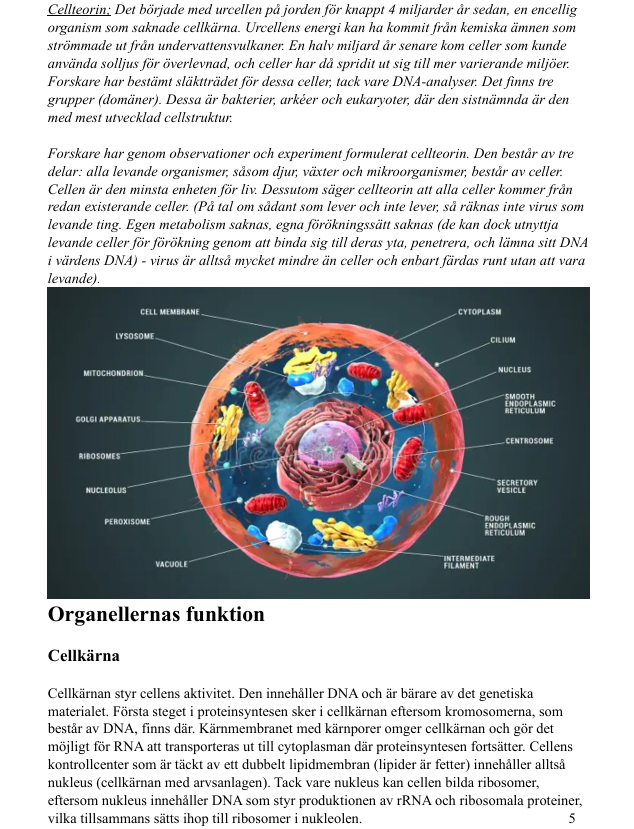
Cell theory; It began with the primordial cell on Earth almost 4 billion years ago, a single-celled organism that lacked a nucleus. The primordial cell's energy may have come from chemicals that flowed out from underwater volcanoes. Half a billion years later, cells that could use sunlight for survival appeared, and cells then spread to more varied environments. Scientists have determined the family tree of these cells, thanks to DNA analyses. There are three groups (domains). These are bacteria, archaea, and eukaryotes, with the latter being the one with the most developed cell structure.
Researchers have formulated the cell theory through observations and experiments. It consists of three parts: all living organisms, such as animals, plants, and microorganisms, are made up of cells. The cell is the smallest unit of life. Furthermore, the cell theory states that all cells come from already existing cells. (Speaking of things that are living and not living, viruses are not considered living things. They lack their own metabolism, and their own methods of reproduction are absent (however, they can use living cells for reproduction by attaching to their surface, penetrating, and leaving their DNA in the host's DNA) - viruses are therefore much smaller than cells and merely move around without being alive).
The Function of Organelles
Nucleus
The nucleus controls the activity of the cell. It contains DNA and is the carrier of genetic material. The first step in protein synthesis takes place in the nucleus because the chromosomes, which consist of DNA, are located there. The nuclear membrane with nuclear pores surrounds the nucleus and allows RNA to be transported out to the cytoplasm where protein synthesis continues. The cell's control center, which is covered by a double lipid membrane (lipids are fats), thus contains the nucleus (the cell nucleus with the genetic material). Thanks to the nucleus, the cell can form ribosomes, since the nucleus contains DNA that controls the production of rRNA and ribosomal proteins, which together are assembled into ribosomes in the nucleolus.
Endoplasmic Reticulum (ER)
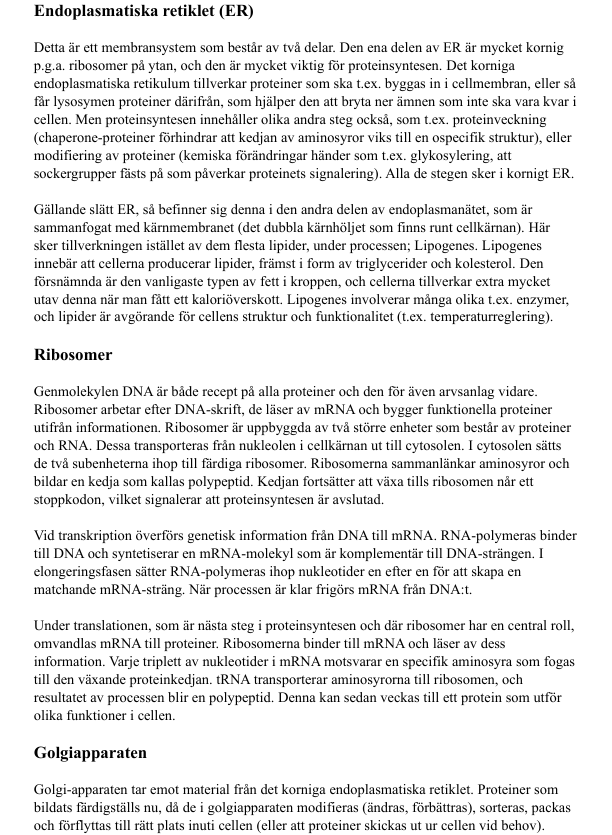
This is a membrane system that consists of two parts. One part of the ER is very rough due to ribosomes on its surface, and it is very important for protein synthesis. The rough endoplasmic reticulum produces proteins that are, for example, built into the cell membrane, or lysosomes receive proteins from there that help them break down substances that should not remain in the cell. However, protein synthesis involves various other steps as well, such as protein folding (chaperone proteins prevent the chain of amino acids from folding into a nonspecific structure), or protein modification (chemical changes occur, such as glycosylation, where sugar groups are attached that affect the protein's signaling). All of these steps occur in the rough ER.
Regarding smooth ER, it is located in the other part of the endoplasmic reticulum, which is connected to the nuclear membrane (the double nuclear envelope surrounding the cell nucleus). Here, the manufacturing instead of most lipids occurs, during the process called lipogenesis. Lipogenesis means that the cells produce lipids, primarily in the form of triglycerides and cholesterol. The former is the most common type of fat in the body, and cells produce extra amounts of it when there is a caloric surplus. Lipogenesis involves many different, for example, enzymes, and lipids are crucial for the cell's structure and functionality (e.g., temperature regulation).
Ribosomes
The genetic molecule DNA is both a recipe for all proteins and also passes on hereditary traits. Ribosomes work according to the DNA code; they read the mRNA and build functional proteins based on the information. Ribosomes are made up of two larger units that consist of proteins and RNA. These are transported from the nucleolus in the cell nucleus to the cytosol. In the cytosol, the two subunits are assembled into complete ribosomes. The ribosomes link amino acids together and form a chain called a polypeptide. The chain continues to grow until the ribosome reaches a stop codon, which signals that protein synthesis is complete.
During transcription, genetic information is transferred from DNA to mRNA. RNA polymerase binds to DNA and synthesizes an mRNA molecule that is complementary to the DNA strand. In the elongation phase, RNA polymerase joins nucleotides one by one to create a matching mRNA strand. When the process is complete, the mRNA is released from the DNA.
During translation, which is the next step in protein synthesis and where ribosomes play a central role, mRNA is converted into proteins. The ribosomes bind to the mRNA and read its information. Each triplet of nucleotides in the mRNA corresponds to a specific amino acid that is added to the growing protein chain. tRNA transports the amino acids to the ribosome, and the result of the process is a polypeptide. This can then fold into a protein that performs various functions in the cell.
The Golgi apparatus
The Golgi apparatus receives material from the rough endoplasmic reticulum. Proteins that have been formed are now completed, as they are modified (changed, improved) in the Golgi apparatus, sorted, packaged, and transported to the correct location inside the cell (or for proteins to be sent out of the cell as needed).
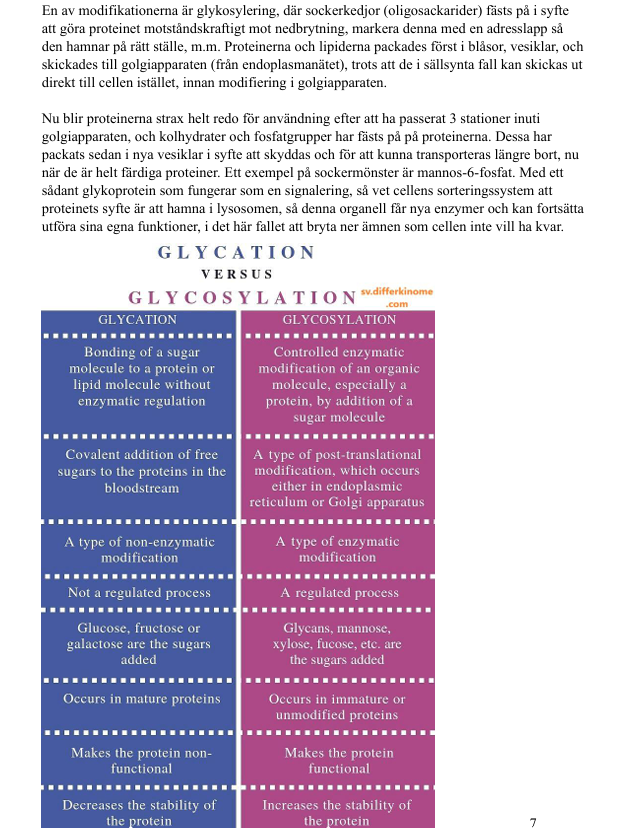
One of the modifications is glycosylation, where sugar chains (oligosaccharides) are attached in order to make the protein resistant to degradation, label it with an address tag so it ends up in the right place, etc. The proteins and lipids were first packed into vesicles and sent to the Golgi apparatus (from the endoplasmic reticulum), although in rare cases they can be sent directly to the cell instead, before modification in the Golgi apparatus.
Now the proteins are shortly going to be completely ready for use after having passed through 3 stations inside the Golgi apparatus, and carbohydrates and phosphate groups have been attached to the proteins. These have then been packed into new vesicles in order to be protected and to be transported further away, now that they are fully finished proteins. An example of a sugar pattern is mannose-6-phosphate. With such a glycoprotein functioning as a signal, the cell's sorting system knows that the protein's purpose is to end up in the lysosome, so this organelle receives new enzymes and can continue carrying out its own functions, in this case breaking down substances that the cell no longer wants to keep.
Glykering
* Bindning av en sockermolekyl till en protein- eller lipidmolekyl utan enzymatisk reglering
* Kovalent bindning av fria sockerarter till proteiner i blodomloppet
* En typ av icke-enzymatisk modifiering
* Inte en reglerad process
* Glukos, fruktos eller galaktos är de sockerarter som binds
* Förekommer i mogna proteiner
* Gör proteinet icke-funktionellt
* Minskar proteinets stabilitet
Glykosylering
* Kontrollerad enzymatisk modifiering av en organisk molekyl, särskilt ett protein, genom tillsats av en sockermolekyl
* En typ av posttranslationell modifiering som sker antingen i det endoplasmatiska retiklet eller i Golgiapparaten
* En typ av enzymatisk modifiering
* En reglerad process
* Glykaner, mannos, xylos, fukos m.fl. är de sockerarter som tillsätts
* Förekommer i omogna eller omodifierade proteiner
* Gör proteinet funktionellt
* Ökar proteinets stabilitet
Mitochondria
Mitochondria are often called the powerhouses of the cell because they convert energy from nutrients together with oxygen into ATP. ATP functions as the cell's energy currency and is necessary for the cell to be able to carry out its various functions. The body's activities and energy needs are strongly dependent on the mitochondria's ATP production, and these mitochondria with their own short DNA sequence (mitochondrial DNA) are found in all eukaryotic cells. With increasing age, mitochondria can function somewhat less efficiently, which contributes to reduced energy production and one may feel less energetic.
Mitochondria are small organelles surrounded by two membranes, an outer and an inner. The inner membrane is folded and forms structures that increase the surface area where ATP is produced. To produce ATP, a series of protein complexes in the inner membrane are used. These complexes transport electrons and pump hydrogen ions across the membrane. When the hydrogen ions then flow back through the enzyme ATP synthase, ATP is formed.
Chloroplasts (regarding plants)
Plants produce their own sugar by using an organelle that animal cells lack, namely chloroplasts. In the chloroplasts is the pigment chlorophyll, which absorbs sunlight. With the help of light energy, water, and carbon dioxide from the air, the plant can produce glucose. At the same time, oxygen is formed as a byproduct and released into the surroundings, which plants do not like, as it is bad for them, but for animal organisms it is fantastic. Plants only need enough oxygen for their own cellular respiration. The chloroplasts that perform photosynthesis are surrounded by double membranes and contain, in addition to chlorophyll, various enzymes required for the process.
Photosynthesis inside the chloroplasts is thus sunlight + 6CO2 + 6H2O → sugar (C6H12O6) + 6O2, and the chloroplasts work closely near the plant cell's mitochondria, and the two organelles, both of which have their own DNA outside the nucleus, benefit greatly from each other. The reaction involved in cellular respiration carried out in the mitochondria (in all cells except bacteria) is: C6H12O6 + O2 → CO2 + H2O + energy (ATP). Scientists have observed that around each chloroplast there are some mitochondria. These stick together while chloroplasts make sugar through photosynthesis and mitochondria use the sugar in cellular respiration. This produces the cell's ATP.
The theory of evolution; It was Charles Darwin who wrote the book On the Origin of Species, in 1859. He was a naturalist and biologist, and had the opportunity to travel around the world on the ship HMS Beagle for almost 5 years. During that time he studied animals, plants, fossils, and made observations that laid the foundation for his theory of evolution. Evolution means change of heritable traits in a population over generations. Individuals with traits that provide an advantage in a certain environment have a greater chance of surviving and producing offspring. These traits are passed on to the next generation, which causes the population to gradually change.
There is not an infinite amount of space and resources in the environment. This creates competition between, for example, animals or plants, and evolution does not happen because individuals want or need it. New traits arise randomly; siblings, for instance, always differ slightly. It is the individuals with the more desirable traits who get more access to food, territory, and mates.
The in-depth text about rabbits in Biology level 1 gives us more perspective on evolution and the development of species. Here we have a population of rabbits living along a shoreline. 50% of these have allele (variant of a gene) A, which represents long ears, and the rest have allele a and have much shorter ears. The rabbits live together with each other, and both allele A and a are passed on to the next generation unchanged in proportion.
If an earthquake occurs, causing the river's course to change slightly, so that the rabbit population is divided into two smaller populations, which are now isolated from each other... Then they can no longer mate with each other and genetic differences arise over time. Mutations, natural selection, etc., cause the populations to evolve in different directions. This is an example of evolution.
The rabbits in the example above move in different directions. One group searches for food further south, and the other searches for food further north. Rabbits with long ears have an advantage in the south, and rabbits with short ears thrive more in the north. This is due to the different climates that prevail. In the south, it is warm, and rabbits with long ears can cool themselves better, which gives them more time to search for food, play, and find a mate. But for the other rabbits, it is the opposite. In a cold climate, it is more advantageous to have shorter ears. Therefore, allele A becomes more common in the south and allele a more common in the north, for example 75% in each population. This is another example of evolution.
Cellular respiration and the citric acid cycle
In the gastrointestinal tract, food is broken down into smaller components. Polysaccharides are broken down into monosaccharides, primarily glucose. Fat is broken down into fatty acids and glycerol. The nutrients are absorbed into the blood and transported into the body's cells. In the cytoplasm, glycolysis occurs, where glucose is broken down into two pyruvate molecules. Pyruvate is then transported into the mitochondrion,
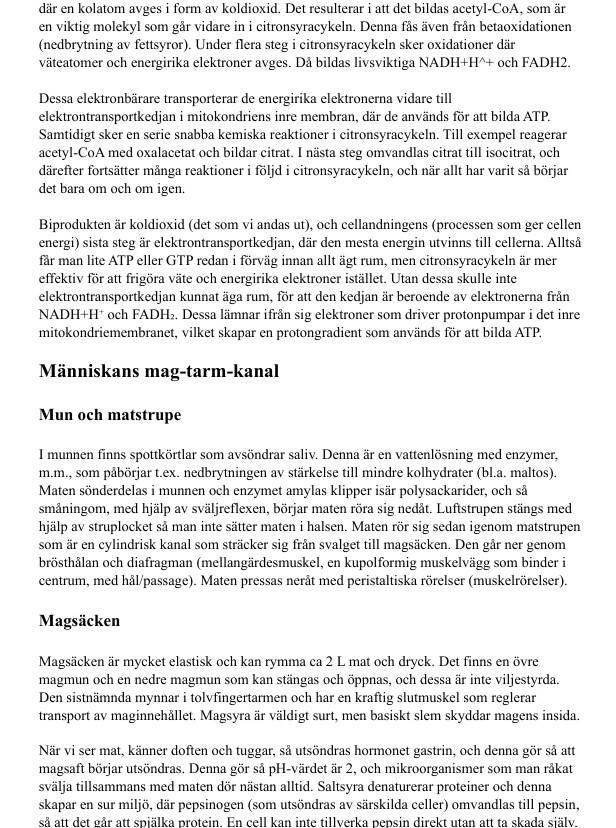
where a carbon atom is released in the form of carbon dioxide. This results in the formation of acetyl-CoA, which is an important molecule that proceeds into the citric acid cycle. This is also obtained from beta-oxidation (breakdown of fatty acids). During several steps in the citric acid cycle, oxidations occur in which hydrogen atoms and high-energy electrons are released. This forms the vital NADH+H^+ and FADH2.
These electron carriers transport the energy-rich electrons further to the electron transport chain in the inner membrane of the mitochondria, where they are used to form ATP. At the same time, a series of rapid chemical reactions occur in the citric acid cycle. For example, acetyl-CoA reacts with oxaloacetate to form citrate. In the next step, citrate is converted into isocitrate, and thereafter many reactions follow in sequence in the citric acid cycle, and once everything has occurred, it just starts over and over again.
The byproduct is carbon dioxide (what we exhale), and the final step of cellular respiration (the process that provides the cell with energy) is the electron transport chain, where most of the energy is extracted for the cells. So you get a little ATP or GTP in advance before everything has taken place, but the citric acid cycle is more efficient for releasing hydrogen and energy-rich electrons instead. Without these, the electron transport chain could not have occurred, because that chain depends on the electrons from NADH+H⁺ and FADH₂. These give off electrons that drive proton pumps in the inner mitochondrial membrane, creating a proton gradient that is used to form ATP.
The Human Gastrointestinal Tract
Mouth and Esophagus
In the mouth, there are salivary glands that secrete saliva. This is a water solution with enzymes, etc., that begins, for example, the breakdown of starch into smaller carbohydrates (including maltose). Food is broken down in the mouth, and the enzyme amylase cuts polysaccharides apart, and eventually, with the help of the swallowing reflex, the food begins to move downwards. The windpipe is closed with the help of the epiglottis so that food does not go down the wrong way. The food then moves through the esophagus, which is a cylindrical canal that extends from the pharynx to the stomach. It goes down through the chest cavity and the diaphragm (a dome-shaped muscle wall that attaches in the center, with an opening/passage). The food is pushed downward by peristaltic movements (muscle movements).
The Stomach
The stomach is very elastic and can hold about 2 liters of food and drink. There is an upper esophageal sphincter and a lower esophageal sphincter that can be opened and closed, and these are not under voluntary control. The latter opens into the duodenum and has a strong sphincter that regulates the transport of stomach contents. Stomach acid is very acidic, but alkaline mucus protects the inside of the stomach.
When we see food, smell it, and chew, the hormone gastrin is secreted, and this causes gastric juice to start being secreted. This results in a pH value of 2, and microorganisms that have been accidentally swallowed with the food almost always die. Hydrochloric acid denatures proteins and creates an acidic environment, where pepsinogen (secreted by special cells) is converted into pepsin, allowing the breakdown of protein. A cell cannot produce pepsin directly without harming itself.
Parietal cells produce hydrochloric acid. The stomach has a lot of musculature, which facilitates the kneading of food so that the gastric juice can reach everywhere. Epithelial cells produce the protective mucus that contains bicarbonate, but epithelial cells are cells that usually form continuous layers in several places in the body. Epithelial cells acquire different specializations depending on where they are located. These are located over the stomach's folds (rugae), and help contribute to the stomach's flexibility when it is empty or when it is distended. The epithelial cells also lie as a layer over both stomach openings (over circular muscles – sphincters), which are mostly kept closed to avoid the risk of reflux in either of them.
Small intestine, intestinal juice, pancreas, and bile
The first part of the small intestine is the duodenum, which is about 25 cm long, while the small intestine as a whole is approximately 5-6 meters long. It constitutes the part of the digestive tract that extends from the stomach to the large intestine. The length of the small intestine varies between different species and is generally longer in herbivores than in carnivores, as plant-based food is more difficult to break down and requires a more extensive digestion process. Research shows that early humans had a digestive system that was more adapted to a high-fiber diet, but since humans began cooking food before consumption, we have now, as a result, ended up with a somewhat different, simpler digestive system.
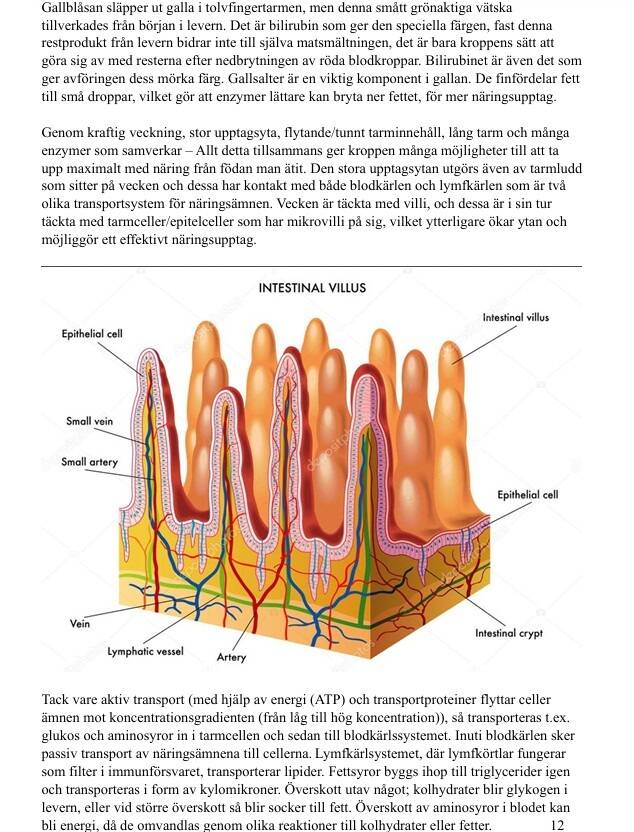
Compared to gorillas, which are primarily herbivores, these have a more developed digestive system adapted for a high-fiber diet. Their small intestine is about 6–7 meters long, but above all, the entire intestinal system is larger and more specialized to efficiently break down plant material. Both humans and, for example, gorillas have a very large internal surface area in the small intestine. In humans, this amounts to about 30 m². The mucosa is heavily folded and covered with intestinal villi and microvilli, which greatly increases the absorptive surface and allows for efficient uptake of nutrients into the blood.
The enzymes come from the pancreas. In the duodenum, pancreatic juice is most relevant regarding the various functions of the pancreas. The human body produces about 1.5 liters of pancreatic juice per day. That may sound like a lot, but it is this that processes the food in the next step, and one eats several times a day. The basic pancreatic juice neutralizes the stomach acid. It is also a replenishing dose with amylase enzymes (which break down starch into maltose), as the initial amylase that came from the saliva has by this time stopped functioning.
In the stomach, cells mainly produced pepsinogen, which became pepsin (which breaks down proteins), and hydrochloric acid (which denatured them). In the duodenum, enzymes are released that will now act throughout the 6 m long small intestine. We get an inactive trypsin from the pancreas via pancreatic juice, which we had not received before, and also inactive chymotrypsin, which creates similar reactions with polypeptides, splitting them into smaller peptides. A lot of lipase enzyme comes out into the duodenum and breaks down fat into glycerol and fatty acids. In the stomach, there was only a little lipase. There are also many peptidases here, often located in the intestinal mucosa, which snip off peptides to produce amino acids.
Intestinal juice is the liquid produced in the mucous membrane of the small intestine, and its enzymes break down, for example, disaccharides into monosaccharides. Thus, the body breaks down food from many different directions.
The gallbladder releases bile into the duodenum, but this slightly greenish fluid was originally produced in the liver. It is bilirubin that gives it the characteristic color, although this by-product from the liver does not contribute to digestion itself; it is merely the body's way of getting rid of the remains after the breakdown of red blood cells. Bilirubin is also what gives stool its dark color. Bile salts are an important component of bile. They break down fat into small droplets, which makes it easier for enzymes to break down the fat, allowing for more nutrient absorption.
Through strong folding, large absorptive surface, liquid/thin intestinal contents, long intestine and many enzymes working together – all of this together gives the body many opportunities to absorb the maximum amount of nutrients from the food one has eaten. The large absorptive surface also consists of intestinal villi located on the folds, and these are in contact with both blood vessels and lymph vessels, which are two different transport systems for nutrients. The folds are covered with villi, and these in turn are covered with intestinal cells/epithelial cells that have microvilli on them, which further increases the surface area and enables efficient nutrient absorption.
Thanks to active transport (with the help of energy (ATP) and transport proteins, cells move substances against the concentration gradient (from low to high concentration)), substances such as glucose and amino acids are transported into the intestinal cell and then to the blood vessel system. Inside the blood vessels, passive transport of nutrients to the cells takes place. The lymphatic system, where lymph nodes function as filters in the immune system, transports lipids. Fatty acids are reassembled into triglycerides and transported in the form of chylomicrons. Excess of something; carbohydrates become glycogen in the liver, or with greater excess, sugar becomes fat. Excess amino acids in the blood can become energy, as they are converted through various reactions into carbohydrates or fats.
The colon and rectum
The cecum is the first part of the colon and is located at the junction with the small intestine. It has a small appendix, which is believed to play a role in the immune system. The large intestine is the longest part of the colon and is mainly responsible for the absorption of water and salts. Bacteria in the large intestine break down certain substances and produce, among other things, vitamin K, which plays a role in blood clotting, as well as certain B vitamins. Therefore, many bacteria are important and beneficial. However, the number of bacteria can vary in many people, depending on, for example, how much fiber one eats, or if one has a deficiency of lactase (an enzyme that breaks down lactose), or if one has recently taken antibiotics that can affect the gut flora. The rectum is the last part of the colon. Here there is an inner and outer sphincter muscle. It is the latter that is under voluntary control.
Human respiratory organs
Lungs
The human respiratory organs are a complex system, where oxygen is absorbed and carbon dioxide is expelled through the lungs (two indentations whose insides are covered with moist epithelial cells). We have both upper and lower airways. Air enters through the nose or mouth, and the air is moistened thanks to the moist epithelial cells and warmed up. Oxygen on land is more available than in water, and land-dwelling animals spend less energy obtaining oxygen. A human's lungs are covered with pleura – a thin membrane consisting of two layers. It surrounds the lungs and allows smooth breathing. The lung pleura (outer) follows the shape of the lung, and the thoracic pleura (inner) lines the inside of the chest and, for example, the diaphragm. Between them is pleural fluid that reduces friction.
In the throat, the airways and the esophagus intersect. If the epiglottis ever fails to close the windpipe when swallowing, food can go the wrong way and trigger a cough reflex. High up in the windpipe sits the larynx, where the vocal cords are located. These regulate sound production by tightening and relaxing depending on whether we speak or not. The larynx is made up of cartilage and muscles that keep the airway open while at the same time enabling voice production.
The diaphragm, which lies under the lungs, is a central breathing muscle. When it contracts (tightens), it moves downward, which increases the volume of the chest cavity and lowers the pressure in the lungs so that air is drawn in. Breathing is thus controlled by pressure differences; when the diaphragm relaxes and rises, the chest cavity volume decreases (the pressure in the lungs temporarily increases). The inhaled air passes through the trachea, which further down divides into two bronchi (which have cartilage and are sturdy), one to each lung. These airways branch into the smallest airways called bronchioles (these do not have cartilage), which finally lead to the alveoli.
Gas exchange
The lung sacs (alveoli) are where the actual gas exchange takes place. The lung sacs are surrounded by a network of thin blood vessels, and oxygen and carbon dioxide can diffuse across this very thin barrier, which is only about one cell thick. Oxygen enters with the inhaled air, getting into the lung-
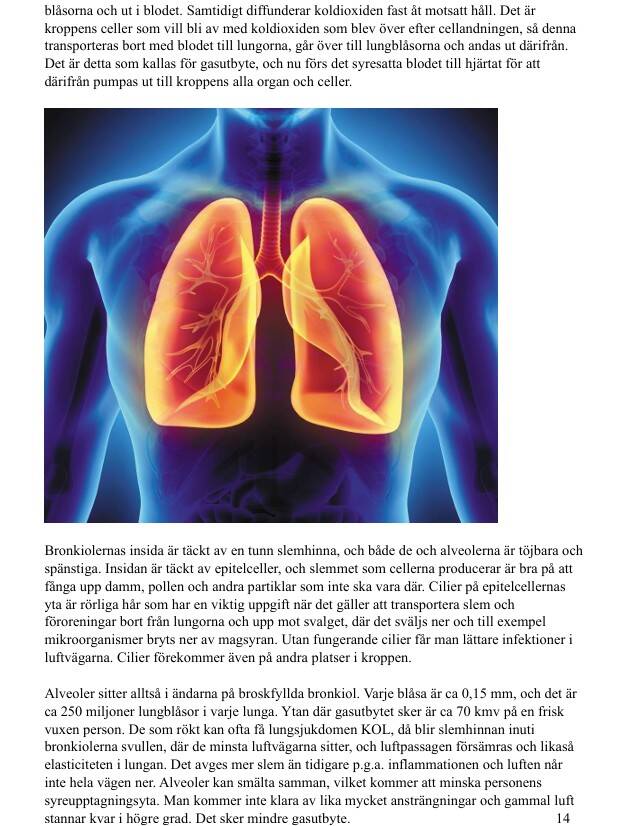
the alveoli and into the blood. At the same time, carbon dioxide diffuses in the opposite direction. It is the body's cells that want to get rid of the carbon dioxide that was left over after cellular respiration, so this is transported away by the blood to the lungs, passes into the lung alveoli, and is exhaled from there. This is what is called gas exchange, and now the oxygenated blood is carried to the heart to be pumped out to all the body’s organs and cells.
The inside of the bronchioles is covered by a thin mucous membrane, and both they and the alveoli are stretchable and elastic. The inside is covered with epithelial cells, and the mucus produced by the cells is good at capturing dust, pollen, and other particles that should not be there. Cilia on the surface of the epithelial cells are movable hairs that have an important task in transporting mucus and pollutants away from the lungs and up toward the throat, where it is swallowed and, for example, microorganisms are broken down by stomach acid. Without functioning cilia, one is more susceptible to infections in the airways. Cilia also occur in other parts of the body.
Alveoli are thus located at the ends of cartilage-filled bronchioles. Each sac is about 0.15 mm, and there are about 250 million lung sacs in each lung. The surface where gas exchange occurs is about 70 square meters in a healthy adult. Those who have smoked can often develop the lung disease COPD; in that case, the mucous membrane inside the bronchioles becomes swollen, where the smallest airways are located, and airflow is impaired as well as the elasticity in the lung. More mucus is produced than before due to the inflammation, and the air does not reach all the way down. Alveoli can merge, which will reduce the person's oxygen absorption surface. One will not be able to handle as much exertion, and old air remains to a greater extent. Less gas exchange occurs.
Co-evolution: There are other struggles in nature that are not talked about as much as the more visible and dramatic one—namely, animals hunting and being hunted. We will look at co-evolution. This means that different species evolve together through mutual dependence or a kind of evolutionary “arms race.” When one species changes, it creates a selection pressure on the other species to also change. This leads to both species adapting to each other.
A classic example is the relationship between predators and prey. If a prey animal develops better camouflage or speed, the predator must in turn become better at detecting or capturing its prey. In this way, they drive each other's evolution forward. All of this started with microorganisms several billion years ago that slowly exhibited the same patterns, interacted with each other, and thus evolved further. This happened slowly at first and then faster, as the organisms developed more advanced senses and functions.
Coevolution can also be cooperative, for example between flowers and pollinators. Some plants develop specific shapes, colors, or scents that attract a certain insect, while the insect develops traits that make it better at collecting nectar from that particular plant. Both benefit from the cooperation. Another example is that butterflies developed a proboscis to be able to suck up nectar. This led to some flowers developing longer floral tubes, which makes pollination more efficient.
In summary, coevolution is a process in which species do not evolve in isolation, but in close interaction with each other, for which there are many interesting, often beautiful, examples in nature.
The development of scientific theories
New theories are obtained through observations, experiments, and discussion. The subject of biology helps us understand how these phenomena are connected. To make experiments valid (reliable and scientifically sound) in research and biology, one follows a careful process. The purpose is to reduce sources of error and demonstrate the reliability of the results.
* Formulate a research question and a hypothesis. The hypothesis should be testable and based on previous knowledge.
* Plan the execution of the experiment. Only one variable may be changed at a time, and then measurements are taken. One must be sure of what causes changes during the experiment.
* A control group is also used. It is a group that is not exposed to the change being tested.
* Repetition is another important part. The experiment should be conducted several times, preferably with many individuals or samples. This reduces the risk of random errors and makes the results more reliable.
* Accurate measurement and documentation are crucial.
* The results are analyzed using statistics.
* Reproducibility is important for theories to be considered valid.
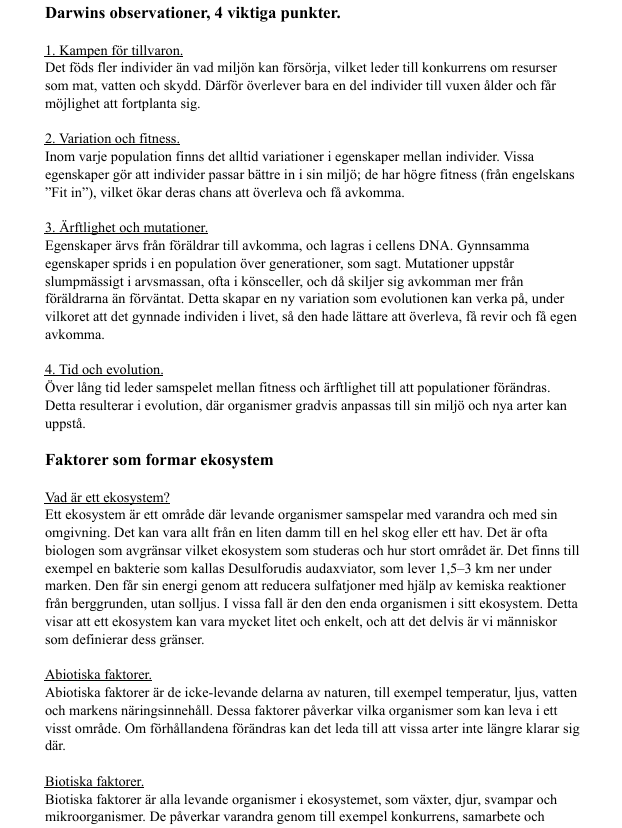
Darwin's observations, 4 important points.
1. The struggle for existence.
More individuals are born than the environment can support, which leads to competition for resources such as food, water, and shelter. Therefore, only some individuals survive to adulthood and get the opportunity to reproduce.
2. Variation and fitness.
Within every population, there are always variations in traits among individuals. Some traits make individuals better suited to their environment; they have higher fitness (from the English 'Fit in'), which increases their chances of surviving and producing offspring.
3. Heredity and mutations.
Traits are inherited from parents to offspring, and stored in the cell's DNA. Favorable traits spread in a population over generations, as mentioned. Mutations occur randomly in the genetic material, often in sex cells, and then the offspring differ from the parents more than expected. This creates a new variation that evolution can act on, under the condition that it benefited the individual in life, making it easier to survive, obtain territory, and have its own offspring.
4. Time and evolution.
Over long periods, the interaction between fitness and heredity leads to changes in populations. This results in evolution, where organisms gradually adapt to their environment and new species can emerge.
Factors that shape ecosystems
What is an ecosystem?
An ecosystem is an area where living organisms interact with each other and with their surroundings. It can be anything from a small pond to an entire forest or an ocean. It is often the biologist who defines which ecosystem is being studied and how large the area is. For example, there is a bacterium called Desulforudis audaxviator, which lives 1.5–3 km underground. It obtains its energy by reducing sulfate ions through chemical reactions from the bedrock, without sunlight. In some cases, it is the only organism in its ecosystem. This shows that an ecosystem can be very small and simple, and that it is partly humans who define its boundaries.
Abiotic factors.
Abiotic factors are the non-living parts of nature, such as temperature, light, water, and the nutrient content of the soil. These factors affect which organisms can live in a certain area. If the conditions change, it can lead to certain species no longer being able to survive there.
Biotic factors.
Biotic factors are all living organisms in the ecosystem, such as plants, animals, fungi, and microorganisms. They affect each other through, for example, competition, cooperation, and
predation (to eat or be eaten). The relationships between organisms are important for how the ecosystem functions.
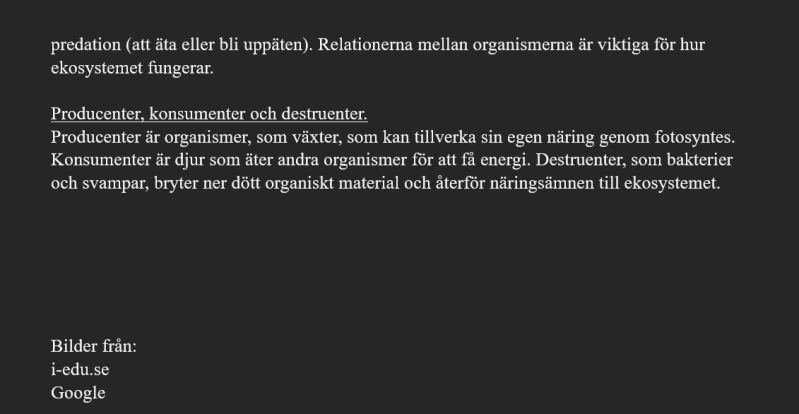
Producers, consumers, and decomposers.
Producers are organisms, such as plants, that can make their own food through photosynthesis. Consumers are animals that eat other organisms to get energy. Decomposers, such as bacteria and fungi, break down dead organic material and return nutrients to the ecosystem.
Images from:
i-edu.se
Google
Sources:
Nationalencyklopedin (2025). Biologi 1. Höganäs: Bokförlaget Bra Böcker.
Vigué-Martín, M. (2004). Atlas of the Human Body. Bath: Parragon Books.
Magnusson, Sjögren, Örnberg, m.fl. (2004). Vad Varje Svensk Bör Veta. Albert Bonniers Förlag.
B. Lundh, J. Malmquist (2009). Medicinska Ord. Studentlitteratur.
Björk, I., Billeter, M. & Fällman, M. (2011). Cellbiologi. Lund: Studentlitteratur.
Hult, K. N. (år). Naturligtvis Naturkunskap 1b. Stockholm: Natur & Kultur.
https://naturvetenskap.se/biologi (2026-04-02)
https://undervisning.ehinger.nu/ (2026-04-02)
https://sv.wikipedia.org/wiki/V%C3%A4xtcell (2026-04-03)
https://sv.scienceaq.com/Biology/1005386606.html (2026-04-06)
https://diabetes.nu/allt-om-triglycerider/ (2026-04-06)
https://undervisning.ehinger.nu/amnen/biologi-2/lektioner/cell-och-molekylarbiologi/endomembransystemet.html (2026-04-06)
https://undervisning.ehinger.nu/amnen/biologi-1/lektioner/cellgenetik/proteinsyntesen-iii-translation.html (2026-04-06)
https://www.youtube.com/watch?v=39HTpUG1MwQ (2026-04-09)
https://www.youtube.com/watch?v=RISGPNF8ZHQ (2026-04-12)
https://www.youtube.com/watch?v=uZH2Wp4ujYU (2026-04-12)
https://www.youtube.com/watch?v=pu2-HODOZ10 (2026-04-14)

Born to make you happy:
https://www.youtube.com/watch?v=Yy5cKX4jBkQ
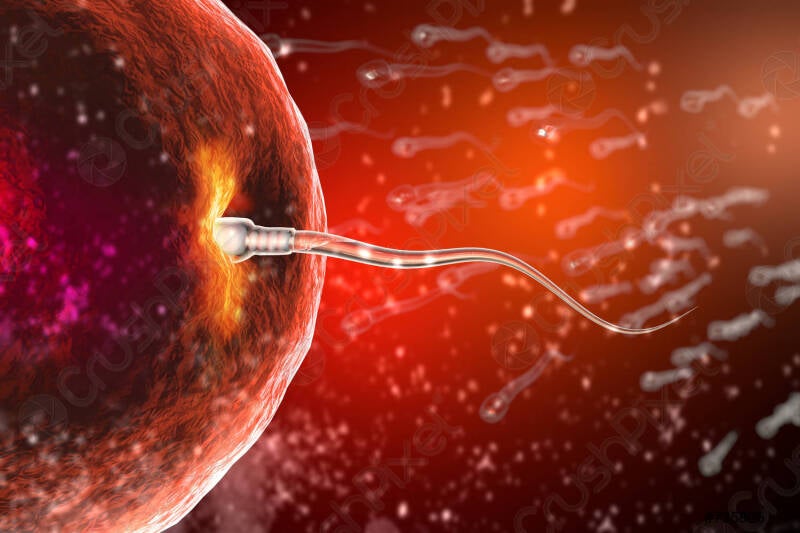

The images are taken from Google Images.
Add comment
Comments